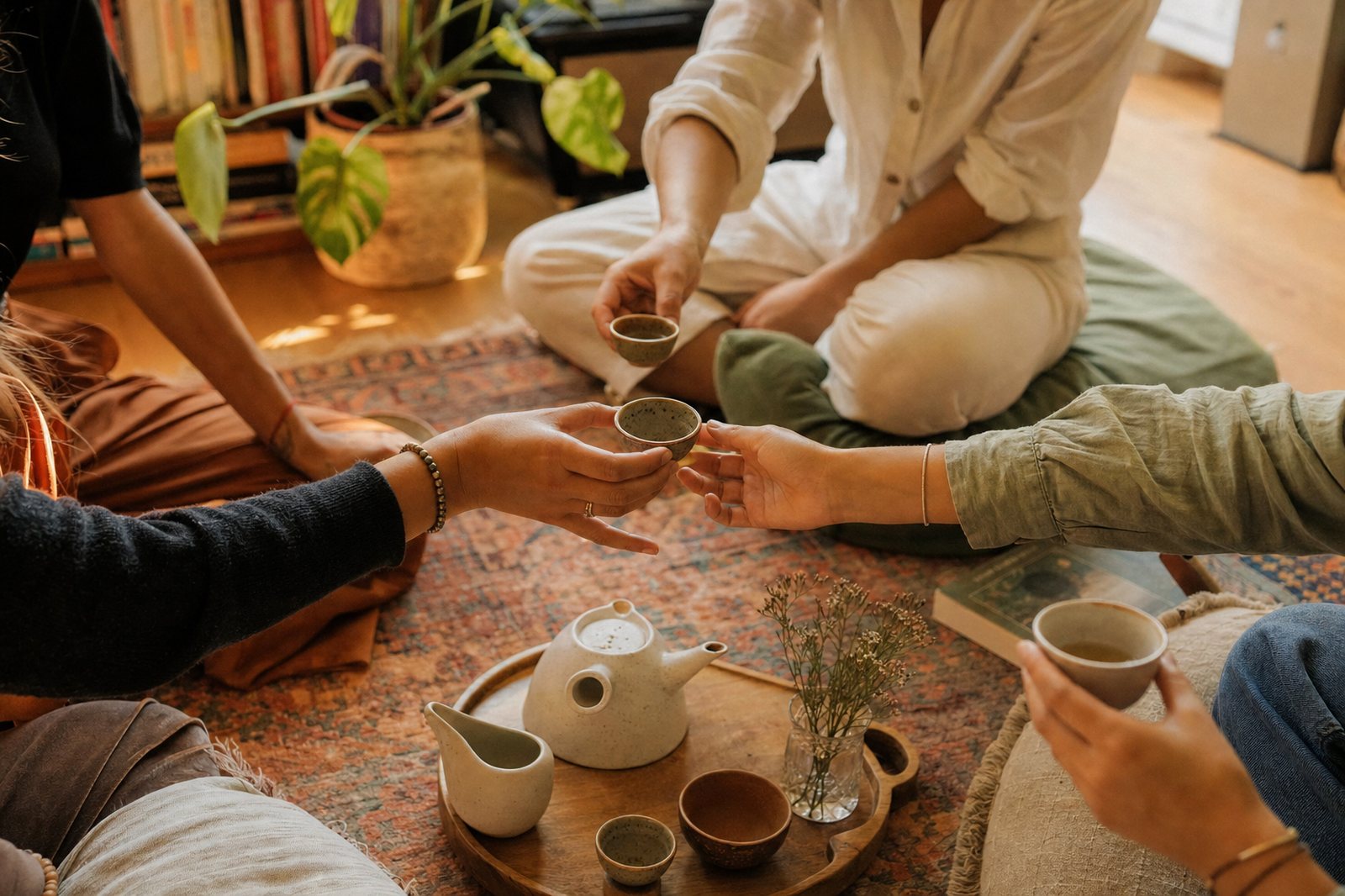
We didn’t set out to sell tea.
Why a pu-erh brand exists in the U.S. in 2026, and why it looks nothing like the tea aisle you’re picturing.
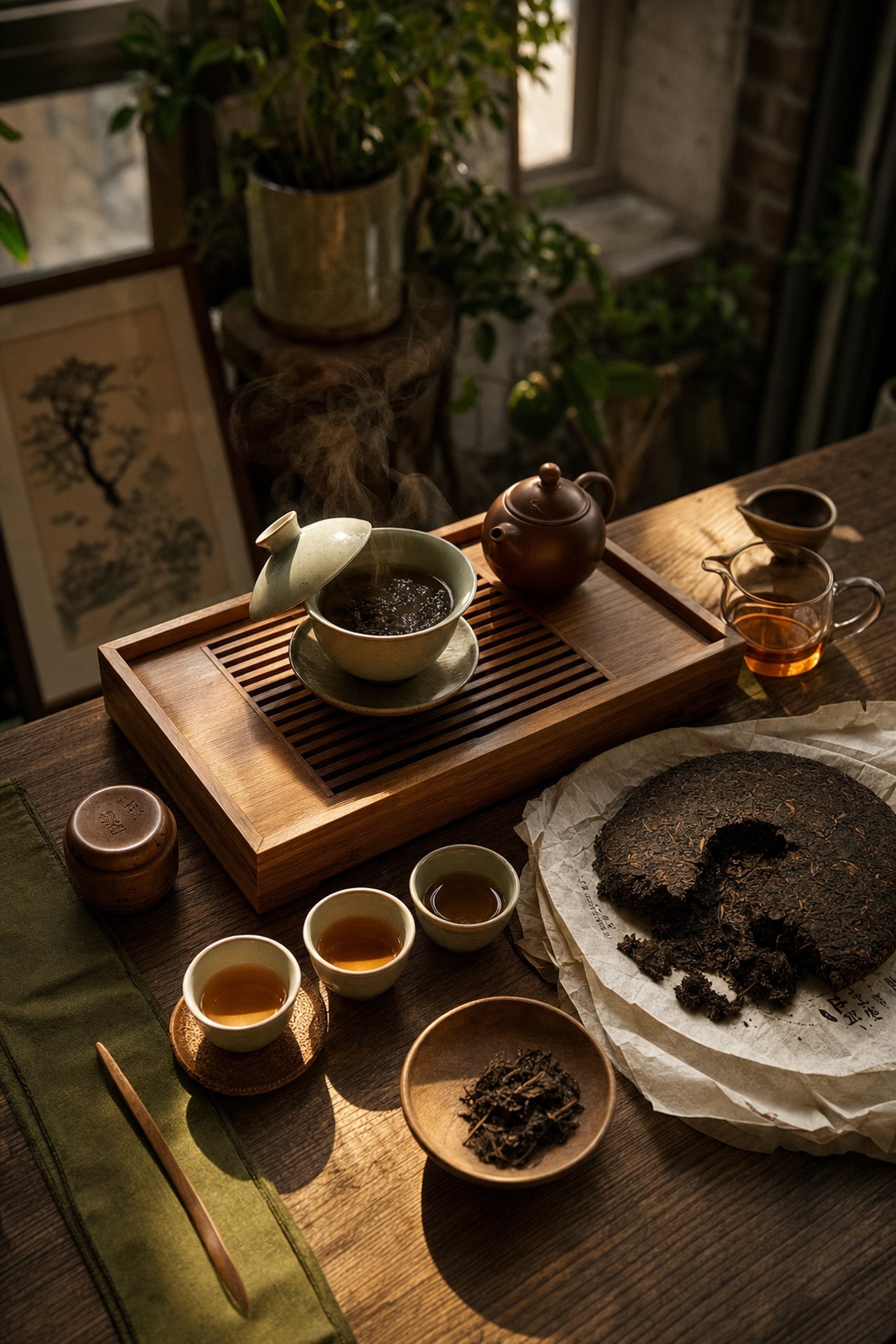
A few years ago I started noticing something happening on the other side of the world. In Ukraine, pu-erh and gongfu tea ceremony had genuinely caught on — but not in the buttoned-up, place-mat-and-good-posture way tea usually shows up here. People were brewing it outside, sitting on the grass. At outdoor raves, between sets. Alone on the couch at 1am. While rolling something else entirely.
It wasn’t a wellness routine. It was a ritual that fit into an actual life — messy, social, half-serious, completely sincere.
There are dozens of stores doing this already, and none of them are boring. They’re selling to people who are into music, into being outside, into slowing down without becoming a completely different person to do it. I hadn’t seen anyone build that here.
So Slow Burn started as one question: what would it look like to bring that energy — not the incense-and-silence version of tea, the real one — to the U.S.? Small-batch pu-erh, the gear to actually brew it gongfu style, and none of the pretending that tea has to be quiet to be taken seriously.
Three things we won’t compromise on.
Tea’s a ritual, not a routine.
Five minutes with a gaiwan, on purpose, beats another habit you don’t remember starting.
No pretending.
You don’t need incense or a wall scroll. You need hot water, a leaf that’s actually good, and however many steeps it takes.
Slow doesn’t mean boring.
This isn’t the tea aisle. It’s closer to natural wine or good coffee — something worth getting a little obsessive about.
There’s a word for what it does — cha qi. Tea energy. It’s not caffeine, and it’s not nothing. — why we named the aged sheng “The Shift”